
Overloaded electrical outlets pose one of the most common yet overlooked hazards in modern homes. While it might seem harmless to plug multiple devices into a single outlet using power strips or adapters, this practice can lead to serious consequences, including electrical fires, damaged appliances, and even electrocution. Understanding how to identify overloaded circuits and recognizing warning signs protects your family and property from devastating losses.
Understanding Outlet Capacity and Electrical Load
Every electrical outlet in your home has a specific amperage rating that determines how much power it can safely handle. Standard residential outlets are typically rated for 15 or 20 amps, depending on the circuit they’re connected to. When you plug in devices, each one draws electrical current measured in amps or watts. Exceeding the outlet’s capacity creates dangerous heat buildup that can melt insulation, damage wiring, and ignite surrounding materials.
Many homeowners underestimate how quickly electrical loads add up. A hair dryer alone can draw 12-15 amps, nearly maxing out a standard 15-amp circuit. Add a curling iron and bathroom fan to the same circuit, and you’ve created an overload situation. The problem worsens when using power strips that allow you to plug numerous devices into a single outlet, giving a false sense of available capacity. Modern homes contain far more electronic devices than houses built just 20 years ago. Smartphones, tablets, laptops, smart home devices, gaming systems, and kitchen appliances all compete for outlet space.
Warning Signs of Overloaded Outlets
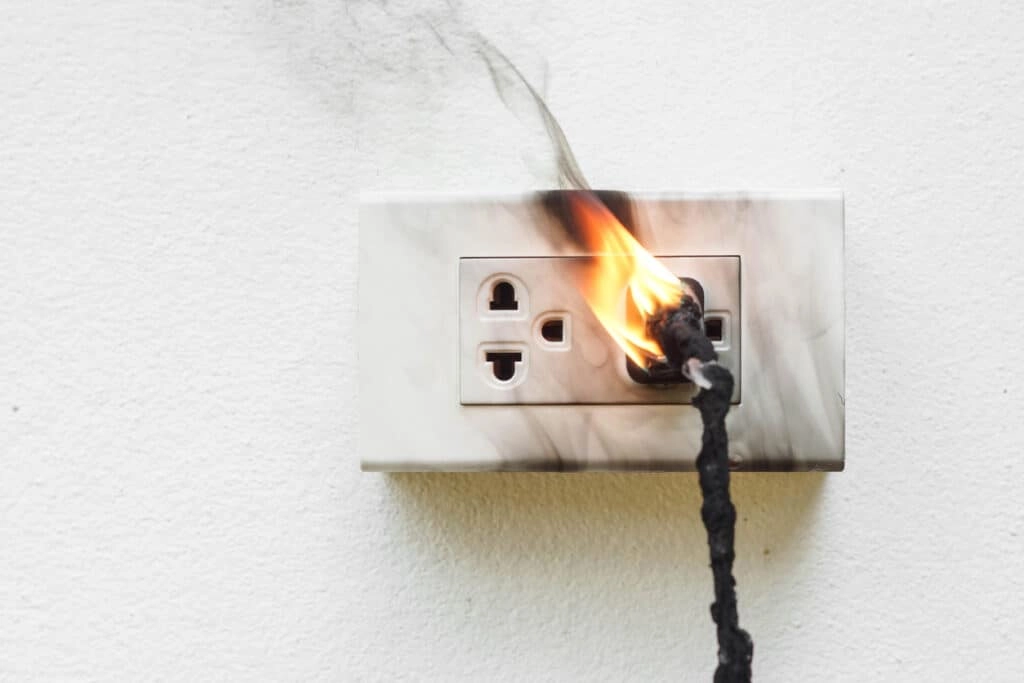
Recognizing the symptoms of overloaded outlets helps you address problems before they become dangerous. Frequently tripped circuit breakers indicate that circuits are drawing more current than they’re designed to handle. While breakers trip to protect your wiring from damage, repeated trips signal an underlying problem requiring attention.
Physical damage to outlets, including cracks, loose-fitting plugs, or outlets that don’t grip plugs firmly, may signal problems. Worn outlets create poor connections that generate heat and increase fire risk. Our licensed electricians can identify overloaded circuits and recommend solutions, including electrical panel installation, to increase your home’s electrical capacity. Call (405) 887-6141 today for a professional safety evaluation.
Common Causes of Outlet Overload
Understanding what causes outlet overload helps you prevent dangerous situations. Power strips and extension cords top the list of culprits. Many people mistakenly believe that power strips increase the available power at an outlet. In reality, they only provide more plug points while the outlet’s capacity remains unchanged.
High-wattage appliances represent another major cause of overloaded circuits. Space heaters, window air conditioners, hair dryers, and toasters all draw substantial current. Running multiple high-draw appliances on the same circuit simultaneously almost guarantees an overload. Kitchen and bathroom circuits are particularly vulnerable because these rooms concentrate numerous appliances in small spaces.
Outdated electrical systems in older homes often lack sufficient circuits for modern living. Homes built before 1980 typically have fewer outlets and circuits than current building codes require, forcing residents to resort to power strips and extension cords.
Safe Practices for Outlet Use
Implementing safe outlet practices significantly reduces electrical fire risk. Avoid using power strips for high-wattage appliances like space heaters, air conditioners, or kitchen appliances. These devices should plug directly into wall outlets on dedicated circuits when possible. Never daisy-chain power strips or extension cords, and don’t run cords under rugs where damage can go unnoticed.
Distribute your electrical load across multiple circuits instead of concentrating devices in one area. If you’re constantly using power strips in certain rooms, you likely need additional outlets installed. Unplug devices when not in use, especially phone chargers and small appliances that draw phantom power even when switched off.
Replace any damaged cords, plugs, or outlets immediately. Inspect cords regularly for fraying, exposed wires, or damage from furniture or foot traffic. Use surge protectors with built-in circuit breakers for sensitive electronics, but remember they don’t increase outlet capacity—they only provide overload protection for connected devices.
When to Call Professional Electricians
Certain electrical situations require professional expertise. If you regularly trip breakers, need more outlets in specific rooms, or rely heavily on power strips and extension cords, your electrical system needs evaluation. Tri-L Electric can assess your home’s electrical capacity and recommend solutions ranging from adding circuits to upgrading your electrical panel.
Homes more than 40 years old benefit from comprehensive electrical inspections. Older wiring materials like aluminum or cloth-insulated wires pose increased fire risks. Licensed electricians can identify outdated components and create modernization plans that enhance safety and meet current code requirements.
Planning kitchen or bathroom remodels provides an excellent opportunity to upgrade the electrical infrastructure. Adding dedicated circuits for specific appliances prevents overload situations and ensures reliable operation.
Protecting Your Home
Electrical safety isn’t just about convenience; it’s about protecting your most valuable investment and the people you love. The National Fire Protection Association reports that electrical failures cause thousands of home fires annually, resulting in hundreds of deaths and billions in property damage. Many of these fires stem from overloaded outlets and circuits.
Tri-L Electric understands the unique electrical challenges facing Norman homeowners. Our team provides expert electrical services, including outlet installation, circuit additions, panel upgrades, and comprehensive safety inspections. We help you identify hidden electrical risks and implement solutions that protect your home while accommodating your modern lifestyle.
Conclusion
Overloaded outlets represent a serious but preventable electrical hazard. By recognizing warning signs like tripped breakers, warm outlets, and flickering lights, you can identify problems early. Understanding outlet capacity and following safe usage practices helps you avoid dangerous overload situations. Modern homes require robust electrical systems capable of powering our increasingly digital lives. Professional electricians can add circuits, install additional outlets, and ensure your system safely meets your family’s needs, protecting your property and providing peace of mind.
Ready to eliminate electrical hazards in your home? Contact Tri-L Electric at (405) 887-6141 to schedule a comprehensive electrical safety inspection. Our experienced electricians serve Norman with reliable, professional service focused on protecting your home and family from electrical risks.