
Building a career in the electrical trade provides a pathway to stable employment, competitive wages, and the satisfaction of skilled work that powers modern life. Norman, Oklahoma, offers excellent opportunities for those interested in this profession, with a straightforward licensing process and strong demand for qualified workers. Understanding the steps to enter this field helps you plan your journey and set realistic expectations for the years ahead.
Why Choose This Career Path
The electrical trade offers unique advantages compared to many other career options. You can enter the field without accumulating student loan debt, earning a paycheck while you learn through apprenticeship programs. The work combines mental challenges with hands-on problem solving, offering variety that keeps the job interesting year after year.
Job security in this profession exceeds that in many other fields. Every building, facility, and home requires electrical systems, creating consistent demand regardless of economic conditions. As technology advances and society becomes increasingly dependent on electrical power, the need for skilled professionals only grows stronger.
Norman’s economy supports electrical professionals across multiple sectors. The University of Oklahoma creates steady demand for educational facility work, while residential construction, commercial development, healthcare facilities, and ongoing maintenance work provide diverse opportunities throughout the city.
Educational Foundation
Starting your career requires building a solid educational base before entering formal apprenticeship programs. A high school diploma or GED represents the minimum requirement, but your preparation can extend beyond this basic credential.
During high school, focus on mathematics courses, including algebra and geometry. You’ll use these skills daily when calculating loads, determining wire sizes, and laying out installations. Physics classes help you understand electrical theory, voltage, current, and the principles governing how systems function. Any technical or shop classes provide valuable hands-on experience with tools and teach you to work safely around equipment.
Many aspiring professionals benefit from pre-apprenticeship programs offered through technical schools or community colleges. The Moore Norman Technology Center offers excellent technical programs that introduce basic concepts, safety practices, tool usage, and fundamental installation techniques. Completing a pre-apprenticeship makes you a more attractive candidate when applying for formal apprenticeships and gives you a head start on the learning curve.
Understanding Oklahoma’s Licensing Structure
Oklahoma uses a tiered licensing system that guides your progression through the trade. Each level represents increased knowledge, responsibility, and earning potential.
The apprentice registration allows you to begin working in the field under supervision while accumulating the experience hours required for advancement. You’ll register with the Oklahoma Construction Industries Board and work under licensed professionals who guide your development.
The residential wireman license permits you to work independently on residential systems. This license requires 4,000 hours of verified work experience and passing an examination covering residential code and installation practices.
The journeyman license represents the standard credential for working independently on most projects. Obtaining this license requires 8,000 hours of verified on-the-job training plus completion of required classroom instruction. The journeyman examination tests your knowledge of electrical theory, the National Electrical Code, and practical applications across residential and commercial work.
The master license stands as the highest certification level in Oklahoma. This credential requires additional experience beyond the journeyman level and passing a comprehensive examination. Master licenses allow you to design systems, pull permits for any work, and supervise other workers.
The Apprenticeship Journey
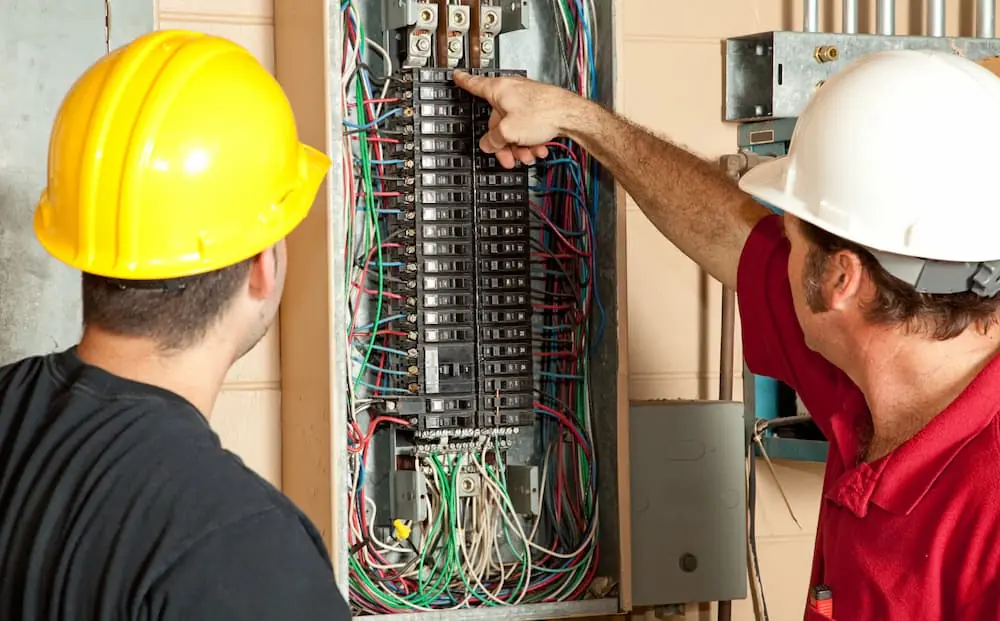
Apprenticeship forms the core of your training, combining paid on-the-job experience with classroom education. This earn-while-you-learn approach distinguishes skilled trades from traditional college paths.
Oklahoma apprenticeships typically last four to five years, during which you’ll accumulate 8,000 hours of supervised work experience. This hands-on training exposes you to diverse projects, installation techniques, and problem-solving scenarios you can’t learn from books alone. You’ll start with basic tasks like pulling wire, installing boxes, and preparing materials, gradually advancing to more complex work like reading blueprints, installing panels, troubleshooting systems, and managing installations.
The classroom component requires approximately 576 hours of technical instruction covering electrical theory, code requirements, safety practices, blueprint reading, and specific installation methods. Many programs offer evening or weekend classes to accommodate your work schedule.
Apprentice wages start lower than journey-level pay but increase regularly throughout your training. Norman area apprentices typically begin around $16 to $20 per hour, with raises every six months or upon completing specific milestones. By your final apprenticeship year, you’ll earn substantially more, often $24 to $30 per hour.
Finding Your Training Opportunity
Securing an apprenticeship requires initiative, but multiple pathways exist in Norman and the surrounding area.
Union programs through the International Brotherhood of Electrical Workers (IBEW) offer structured training with excellent placement rates. Local union halls in the Oklahoma City metro area serve Norman and provide comprehensive education, safe work practices, and fair wages. Union apprenticeships typically offer higher starting wages, excellent benefits, and clear advancement paths.
Independent contractors throughout Norman hire and train apprentices outside union structures. These positions may offer more flexibility in work assignments and scheduling. Many non-union contractors provide excellent training and mentorship, particularly in smaller companies where you work closely with experienced professionals. Businesses like Tri-L Electric at (405) 887-6141 represent the kind of established contractors who invest in training the next generation of skilled workers.
Associated Builders and Contractors operates merit-based apprenticeship programs emphasizing open-shop training and individual advancement based on performance. ABC programs combine classroom instruction with on-the-job training similar to union apprenticeships but within a different organizational structure.
When applying for apprenticeships, prepare a resume highlighting any relevant experience, technical courses, or hands-on skills. Reliability, a strong work ethic, and a genuine interest in the trade matter more than extensive prior experience. A valid driver’s license and dependable transportation are typically required since you’ll travel to various job sites throughout Norman and surrounding communities.
What Your Training Covers
Your apprenticeship years expose you to the full spectrum of work, building competency across multiple areas.
Residential installations teach you to wire homes, install service panels, configure circuits, and troubleshoot common household issues. You’ll learn proper grounding techniques, switch and outlet installation, lighting circuits, and how to meet code requirements for safe residential systems. Norman’s mix of historic homes and new developments provides a diverse residential experience.
Commercial work introduces you to larger-scale projects with more complex requirements. You’ll work on office buildings, retail centers, schools, and healthcare facilities, learning to install conduit systems, commercial lighting, three-phase power distribution, and emergency systems. The University of Oklahoma campus offers unique opportunities for educational facility work.
Industrial experience exposes you to high-voltage systems, motor controls, programmable logic controllers, and specialized equipment. Industrial facilities require understanding unique safety protocols, working with heavy equipment, and maintaining systems that operate continuously.
Service and repair work develops troubleshooting skills essential for career success. Learning to diagnose problems, identify solutions, and complete repairs efficiently separates competent technicians from truly skilled professionals.
Services and Specializations to Consider
As you progress through your career in Norman, you’ll encounter various service areas that shape your expertise and future opportunities. Residential work includes panel upgrades, circuit installations, lighting design, and home rewiring projects throughout established neighborhoods and new developments. Commercial services expand into tenant improvements, building maintenance, and code compliance work for businesses throughout the community. Many professionals also specialize in emergency repair services, providing critical support when power failures or safety issues arise. Understanding these different service categories early in your training helps you identify areas of interest and potential specialization, whether you’re drawn to new construction, renovation work, or service and repair.
Continuing Your Education
Learning continues throughout your career, not just during your apprenticeship years.
Code updates occur regularly, requiring you to stay current with changes affecting your work. The National Electrical Code updates every three years, with each revision incorporating new safety requirements, installation methods, and technological considerations. Oklahoma typically adopts these updates, making ongoing education essential for compliance.
Technology evolution demands continuous learning. Smart home systems, electric vehicle charging infrastructure, energy storage systems, and building automation advance rapidly. Professionals who invest time in understanding these technologies position themselves for the best opportunities and highest wages.
Oklahoma requires continuing education for license renewal, ensuring professionals maintain current knowledge. These requirements typically involve completing specific hours of approved coursework within each licensing period.
Launching Your Career in Norman
Norman offers excellent opportunities for building a successful career in the electrical trade. The city’s stable economy, driven by the University of Oklahoma and a growing business community, creates consistent demand for skilled professionals.
The university alone generates substantial work opportunities, from maintaining existing buildings to constructing new facilities. Student housing developments, campus expansions, and research facilities all require electrical expertise. Norman’s growing healthcare sector, including Norman Regional Health System, provides another stable source of work.
Residential construction continues throughout Norman, with new neighborhoods developing on the city’s edges while established areas undergo renovations and updates. Commercial development along major corridors creates additional opportunities for those specializing in retail, restaurant, and office work.
Taking Your First Steps
If you’re ready to pursue this career in Norman, begin by researching apprenticeship opportunities and reaching out to potential sponsors. Contact union training programs, independent contractors, and ABC chapters to learn about their apprenticeship offerings.
Consider reaching out to established contractors in the Norman area to inquire about opportunities. Many companies appreciate initiative and may have openings for motivated individuals ready to learn the trade. Businesses like Tri-L Electric at (405) 887-6141 understand the value of training skilled professionals and may offer apprenticeship positions to dedicated candidates.
The electrical trade offers a clear path from entry-level apprentice to master craftsman and potential business owner. With dedication, continuous learning, and commitment to quality work, you can build a successful, financially stable career that serves the Norman community and provides personal fulfillment for decades to come.
FAQs
How long does it take to become licensed in Norman?
The typical path takes four to five years through an apprenticeship program, requiring 8,000 hours of on-the-job training and 576 hours of classroom instruction before you can test for your journeyman license.
What are the licensing levels in Oklahoma?
Oklahoma uses four levels: apprentice registration, residential wireman, journeyman, and master. Each requires specific experience hours and passing examinations, with increasing responsibilities and earning potential.
Do I need a college degree to start?
No, you only need a high school diploma or GED. Pre-apprenticeship programs at Moore Norman Technology Center can help, but formal college degrees are not required to enter the electrical trade.
How much do apprentices earn in Norman?
Apprentices typically start at $16 to $20 per hour and receive regular raises throughout training. By the fourth year, wages usually reach $24 to $30 per hour while still learning.
Where can I find apprenticeship opportunities in Norman?
Contact IBEW union programs in the OKC metro area, reach out to independent contractors like Tri-L Electric, or explore ABC apprenticeships. Many established companies in Norman hire motivated apprentices willing to learn.