
Understanding the different types of electrical panels is essential for homeowners and business owners who want to ensure their property has safe, efficient power distribution. The electrical panel, also known as a breaker box or distribution board, serves as the central hub where electricity enters your building and gets distributed to various circuits throughout the space. Choosing the right panel type can impact everything from your electrical capacity to your overall safety.
Understanding Electrical Panel Basics
An electrical panel acts as the command center for your entire electrical system. It receives power from the utility company through the main service line and divides that power into separate circuits that supply different areas and appliances in your home or business. Modern panels include circuit breakers that automatically shut off power when they detect overloads or short circuits, protecting your wiring and preventing potential fire hazards.
The 12 Types of Electrical Panels
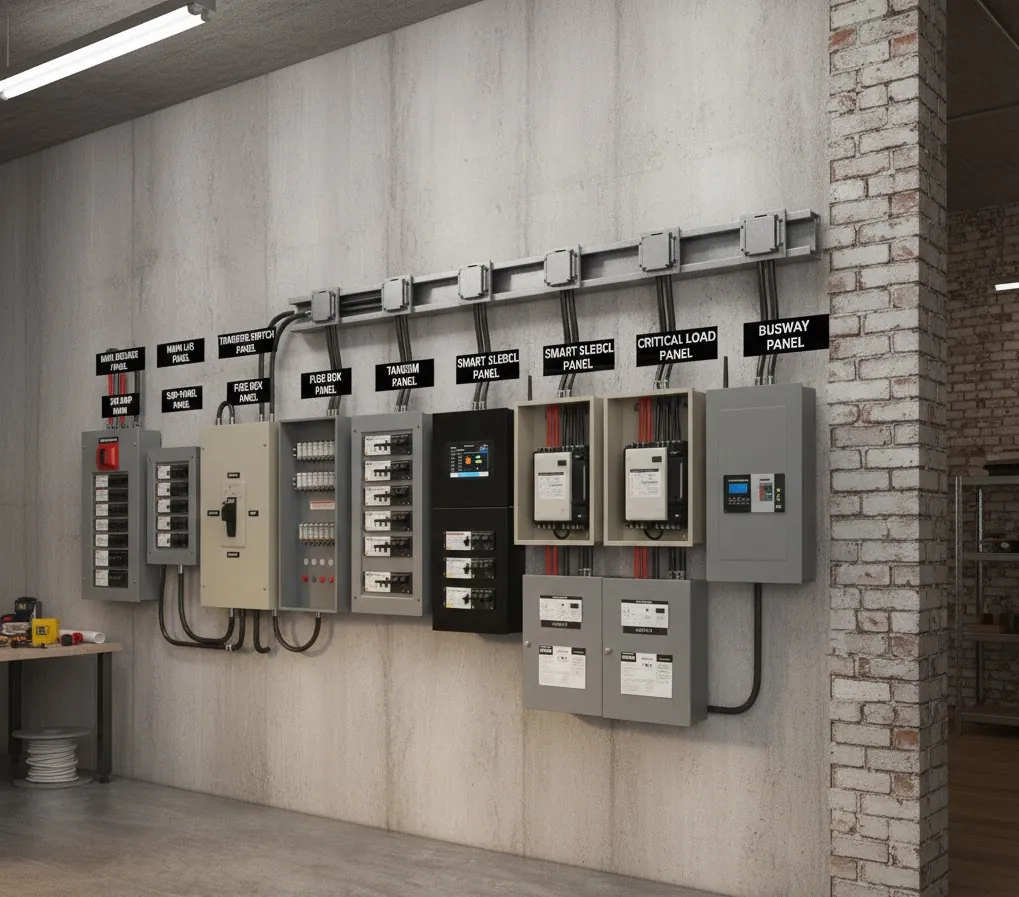
1. Main Breaker Panel
The main breaker panel is the most common type found in modern homes and commercial buildings. This panel features a large main breaker that controls power to the entire system, typically rated at 100, 150, 200, or 400 amps. The main breaker allows you to shut off all electricity to the building with a single switch, which is crucial during emergencies or when performing electrical work.
2. Main Lug Panel
A main lug panel differs from a main breaker panel in that it lacks a main disconnect breaker. Instead, it uses main lugs—heavy-duty connectors that attach the incoming power lines directly to the bus bars. These panels are commonly used as sub-panels in larger properties or when the main disconnect is located elsewhere, such as at the meter base outside the building.
3. Sub-Panel
Sub-panels, also called satellite panels or secondary panels, branch off from the main electrical panel to provide additional circuit capacity in specific areas. These are particularly useful in large homes, workshops, garages, or additions where running individual circuits back to the main panel would be impractical or expensive.
4. Transfer Switch Panel
Transfer switch panels are essential components in backup power systems. These specialized panels allow you to switch between utility power and generator power safely. During a power outage, the transfer switch disconnects your building from the utility grid and connects it to your backup generator, preventing dangerous back-feeding that could harm utility workers or damage equipment. Call us today at (405) 887-6141 to schedule a consultation and ensure your electrical system meets your power demands safely and efficiently.
5. Fuse Box Panel
Fuse box panels represent older electrical panel technology that predates modern circuit breakers. Instead of breakers that flip when overloaded, fuse boxes use fuses, small devices with metal strips that melt when too much current passes through them. Once a fuse blows, you must replace it with a new one rather than simply resetting a breaker.
6. Tandem Breaker Panel
Tandem breaker panels, sometimes called split-bus panels or twin breaker panels, allow you to install two circuits in a single breaker slot by using tandem breakers. These space-saving breakers contain two separate switches in the space normally occupied by one standard breaker, effectively doubling the number of circuits you can install in a panel.
7. GFCI Panel
Ground Fault Circuit Interrupter (GFCI) panels incorporate GFCI protection at the panel level rather than at individual outlets. These panels detect ground faults—situations where electricity takes an unintended path, such as through water or a person—and shut off power within milliseconds to prevent serious shock or electrocution.
8. AFCI Panel
Arc Fault Circuit Interrupter (AFCI) panels protect against arc faults, like dangerous electrical arcs that occur when damaged wiring, loose connections, or faulty equipment create a high-power discharge between conductors. These arcs can generate enough heat to ignite surrounding materials, causing electrical fires.
9. Smart Electrical Panel
Smart panels represent the latest evolution in electrical distribution technology. These advanced panels connect to your home network and smartphone, allowing you to monitor energy usage, control individual circuits remotely, and receive alerts about electrical issues in real time. Some smart panels can even integrate with solar systems, battery storage, and electric vehicle chargers.
10. Solar Panel Junction Box
Properties with solar power systems require specialized junction boxes to manage the connection between solar panels and the building’s electrical system. These panels combine DC power from solar arrays, route it through inverters to convert it to AC power, and integrate it with your main electrical panel or battery storage system.
11. Critical Load Panel
Critical load panels, also called essential circuits panels or backup panels, separate your circuits into essential and non-essential categories. During a power outage, backup power systems like generators or battery storage only supply power to the critical load panel, which typically includes circuits for refrigeration, heating systems, well pumps, medical equipment, and security systems.
12. Busway Panel
Busway panels, also called bus duct panels or powerway systems, use enclosed metal channels containing insulated conductors to distribute large amounts of power efficiently. These panels are primarily used in commercial and industrial settings where traditional wire-based distribution would be impractical due to high current demands or frequent circuit modifications.
Choosing the Right Panel for Your Needs
Selecting the appropriate electrical panel depends on multiple factors, including your current and anticipated electrical load, local building codes, budget constraints, and specific application requirements. A properly sized panel should have enough capacity to handle your current needs plus 20-25% additional capacity for future expansion.
For most modern residential properties, a 200-amp main breaker panel with AFCI and GFCI protection provides adequate capacity and safety. Commercial buildings may require larger panels, sub-panels, or specialized panels depending on their specific power distribution needs. Properties with solar systems, backup generators, or high-tech electrical demands may benefit from smart panels or critical load panels.
Working with experienced electricians ensures your panel selection complies with National Electrical Code (NEC) requirements and local amendments. Professional installation guarantees proper grounding, bonding, overcurrent protection, and safe working clearances around your electrical equipment.
Signs Your Panel Needs Upgrading
Several warning signs indicate your electrical panel may need replacement or upgrading. Frequent breaker trips suggest your panel lacks capacity for your electrical demands. Warm or discolored panels, burning smells, or buzzing sounds indicate dangerous overheating that requires immediate professional attention. Rust or corrosion signals moisture intrusion that compromises safety.
If your panel still uses fuses rather than circuit breakers, or if it lacks the capacity to support modern appliances and electronics, upgrading becomes essential. Properties built more than 40 years ago often have outdated panels that don’t meet current safety standards or provide adequate power for contemporary lifestyles.
Professional Installation Matters
Electrical panel work requires specialized knowledge, proper tools, and strict adherence to safety protocols. Licensed electricians understand load calculations, code requirements, grounding systems, and proper installation techniques that ensure safe, reliable operation. They also carry the insurance and qualifications necessary to obtain permits and pass inspections required by local authorities. Ready to upgrade your electrical panel or need expert advice on which type best suits your property? Tri-L Electric provides professional electrical services with a commitment to safety, quality, and customer satisfaction. Our licensed electricians serve Norman and the surrounding areas with comprehensive panel installation, upgrades, and maintenance. Contact Tri-L Electric at (405) 887-6141 to schedule your electrical panel evaluation today.
Conclusion
Understanding the twelve types of electrical panels helps you make informed decisions about your property’s electrical infrastructure. From the common main breaker panel found in most homes to specialized panels for solar systems, backup power, and smart home integration, each panel type serves specific purposes and offers distinct advantages.
Whether you’re building new construction, upgrading an existing panel, or adding capacity for new circuits, choosing the right panel type ensures safe, efficient power distribution for years to come. Tri-L Electric recommends modern panels with AFCI and GFCI protection that provide superior safety compared to older designs, while smart panels offer unprecedented control and energy monitoring capabilities.